AFDD for AC circuits
Everyday appliances can look like an arc.
Your breaker has to find the real arcs without tripping every time an appliance switches on. We help you build that in.
Last updated
Request a demo
How it works
From the circuit to an arc decision
An AC arc goes out at every zero crossing and strikes again, often on a circuit shared with other loads. AI arc detection finds its signature among them.
Your system: Circuit current
The final circuit your breaker protects.
Your system: Current sensing
A current sensor inside your breaker.
Our solution: Arc detection
AI that finds an arc's signature among appliance noise.
Our solution: Arc decision
Arc or normal, as appliances switch on and off.
Your system: Protection
Opens the circuit at your breaker.
What it handles
Finds arcs, not appliance noise
Cases come from what certification checks and what homes put a breaker through. We run them on your design, with the loads common in your market.
What it catches
- Damaged cables
- Series arcs in cut, crushed or worn cables.
- Loose connections
- Arcs at loose terminals, plugs and sockets.
- Different load currents
- Arcs from light loads up to the breaker's rating.
- Arcs with other loads
- Arcs while other appliances run alongside.
- Cords and leads
- Arcs in appliance cords and extension leads.
What it ignores
- Motors starting
- Vacuum cleaners, drills and fridge compressors.
- Dimmers and LEDs
- Phase-cut dimming and LED lamp drivers.
- Power supplies
- Chargers, computers and TVs.
- Switching on and off
- Inrush as appliances switch on and off.
- Many loads at once
- Several appliances running on one circuit.
Applications
Where it's built in
An AFDD protects one final circuit from the consumer unit, on its own or combined with other protection.
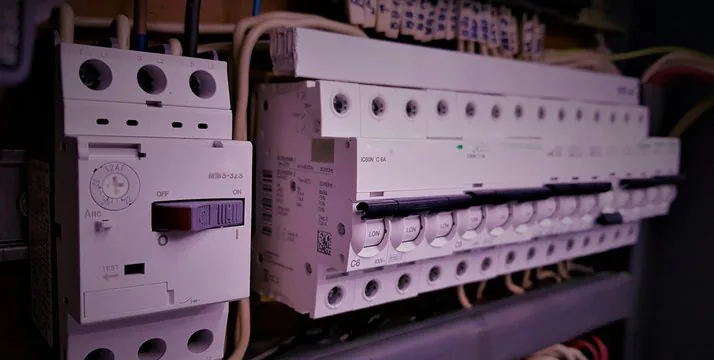
On its own
A dedicated arc fault unit fitted next to the circuit's breaker.
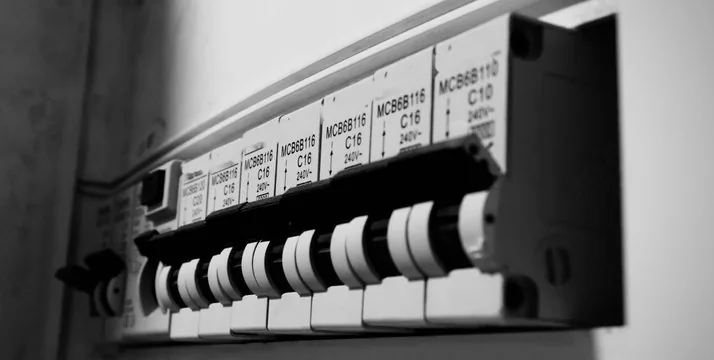
With overcurrent protection
Arc and overcurrent protection in one device.
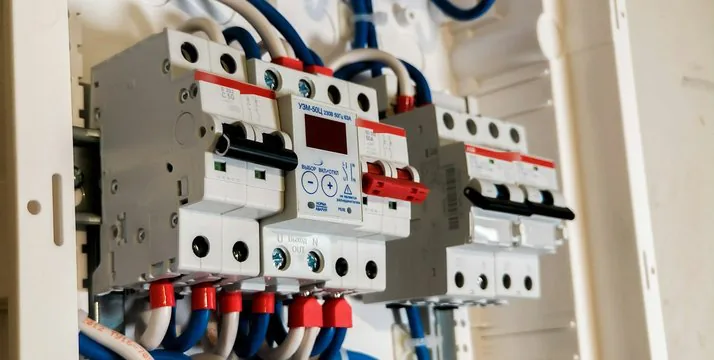
With residual current protection
Arc, overcurrent and earth leakage protection together.
Evaluation
Interested in this solution?
Get in touch with our engineering team to evaluate it for your system.
Evaluation solution. Detection performance depends on the target application, sensing architecture, operating conditions and system validation. Customer protection and safety functions remain subject to product-level validation and applicable requirements.
Other use cases
More on arc fault detection
See how we build AFCI for AC and DC systems.
AFCI for AC and DC systems
Arc fault circuit interrupters for AC circuits and for DC systems such as solar, storage and charging.